
Terms & Conditions
By establishing no liability and the limitations of product availability, Forever 21 is avoiding legal problems and costs from customer claims of faulty website functionality or false product advertising.
Etsy provides another good example for establishing limitations of liability. Their site has an incredibly detailed Terms of Use agreement which includes a clause for Warranties and Limitation of Liability (or the Things You Can't Sue Us For). This clause has five subsections that explain how the company limits its liability.
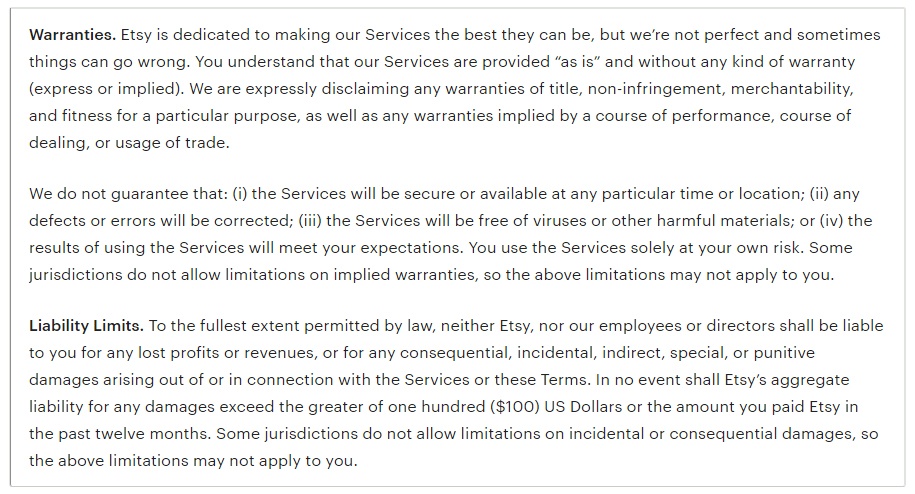
This clause establishes that the company provides its services "as is" and will not be held legally liable for damages from shopping with Etsy.
2. Intellectual Property/Trademarks
As the owner of an ecommerce store, you likely have unique items, designs, content or other proprietary rights that you want to protect. You can do this with a properly written clause dedicated to establishing your Intellectual Property Rights.
The Terms and Conditions agreement gives you a platform to declare what falls under your intellectual property, what the rules are for using those items or information, and what happens if an individual violates your intellectual property rights.
Let's look at this example from the Intellectual Property, Software and Content clause of the ASOS Terms and Conditions. This clause states that the software and content available through the website belongs to ASOS or its licensors and is protected by copyright laws. It goes on to explain what customers can and cannot do with the content or software.
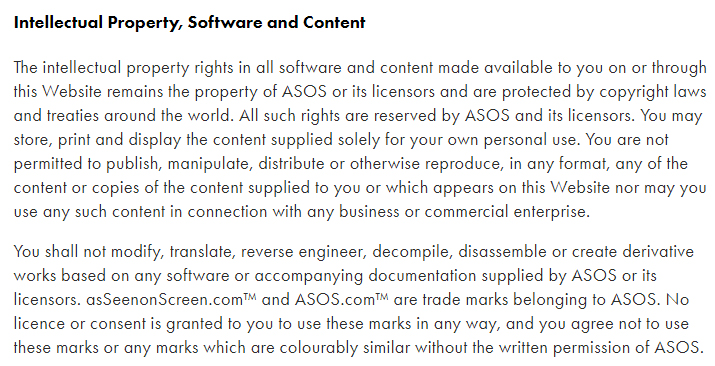
You should create a similar clause within your Terms and Conditions in order to protect your proprietary products and information. Website content, product descriptions, sales emails, coupon codes, designs and other things unique to your business should be covered by an Intellectual Property clause in order to protect your investments in your ecommerce store.
3. Pricing and Payment Terms
Product prices are almost always subject to change, and your right to make these changes should be established in a dedicated Pricing or Payments clause. Other details of customer transactions, such as shipping, returns, refunds and discounts also should be addressed in this clause in order to give you the legal rights to manage these matters in the interest of your online store.
For example, the Terms and Conditions page on the Manolo Blahnik website includes a Price and Payment clause that explains that prices of the products listed on the site and their delivery costs may be changed at any time. It also establishes that the ecommerce store only accepts payments made through credit or debit cards on the checkout page.
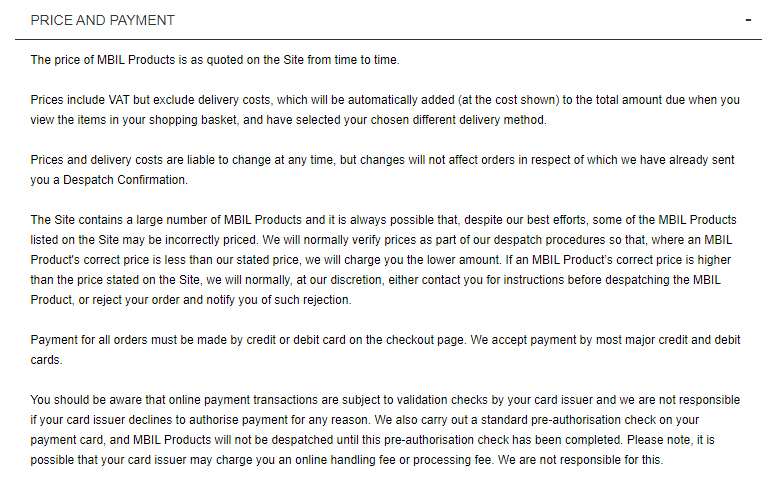
Because you have certain requirements for processing payments, shipping products and managing returns, and because certain things are out of your control (such as shipping delays), you should include a Price and Payments clause in your Terms and Conditions.
4. Dispute Resolution
The Dispute Resolution clause is important for ecommerce stores because it defines the procedures that will be followed in the event of a dispute. This clause typically establishes the jurisdiction where any disputes will be arbitrated if it comes to that, and the governing law that will apply. Obviously, these decisions should be made in the interest of the store's owner.
This clause is particularly important for ecommerce stores that cater to a global audience. Different countries have different laws which could impact the outcome of any dispute.
Apple's Terms of Use includes a clause for Governing Law: Dispute Resolution. It establishes that the laws of the United States and the State of California will be the governing laws in the event of any dispute. It makes an exception, however, for disputes arising from the European Union, in which case, a claim may be made in the country where the complainant resides.
In addition to this, it also mentions that you must make your claims within a timeframe of one year. Finally, it gives some information on how the dispute will be handled if it's not resolved within a reasonable time.
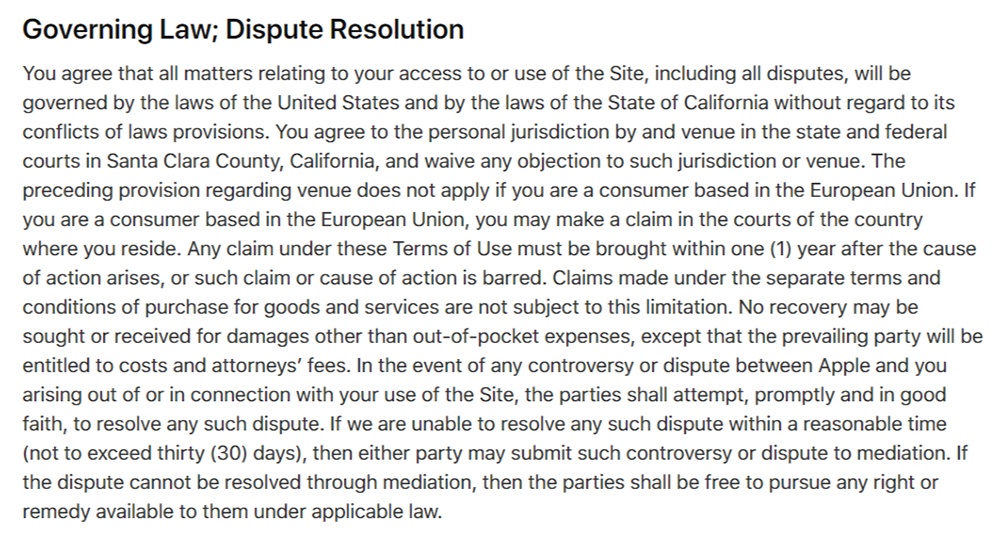
Apple's Governing Law; Dispute Resolution clause offers a good guide for how to establish your Governing Law clause. While it's clear that Apple serves a global audience, it might not be so clear in your case if you target a narrower audience.
Because the Internet is a global marketplace, it is a good idea to consider the possibility that your online customers may come from countries outside of your home country, and write this clause with that in mind.
Displaying Your Terms and Conditions

How you display your Terms and Conditions is another important consideration.
Typically, online stores will include a link to their Terms and Conditions somewhere in the homepage footer, and often near other important links, such as a link to a Privacy Policy.
Our customer care number
+91 7901629112
